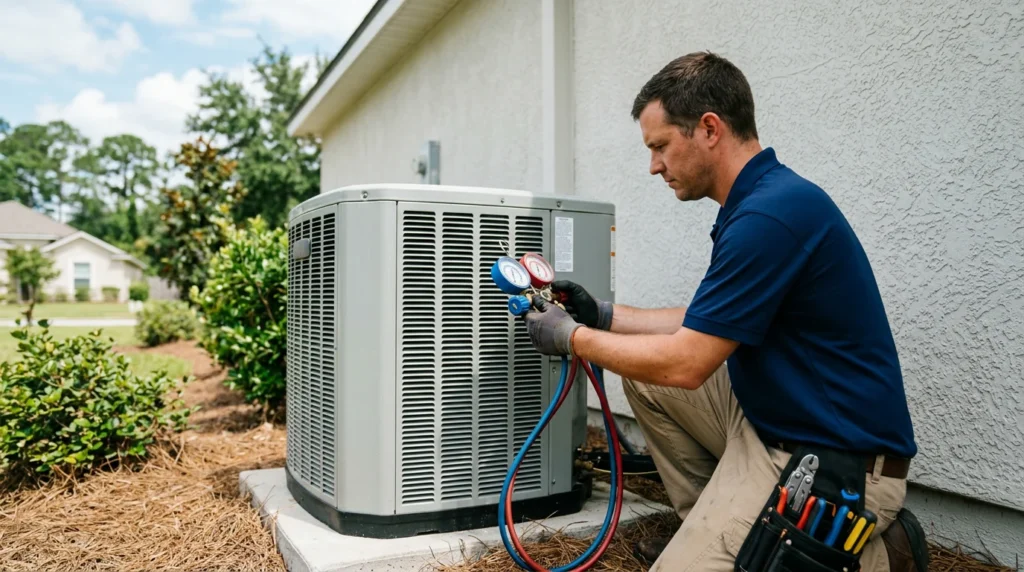
Quick answer: Most homes in Walton County do well with one AC tune-up per year, ideally in spring before the long cooling season. If your system runs long hours, your home deals with heavy pollen and fast filter loading, you’ve had condensate drain clogs in high humidity, or the unit is older, a second check later in the season can prevent shutdowns. A tune-up focuses on cleaning, airflow, electrical checks, and refrigerant performance verification.
What a Tune-Up Actually Includes
A real tune-up is more than swapping a filter. It’s a checklist that targets the parts that commonly cause mid-summer breakdowns: dirty coils, weak airflow, loose electrical connections, and clogged condensate drains. In practice, that means inspecting the indoor and outdoor coils, checking blower operation, verifying thermostat behavior, tightening electrical connections, and testing safety controls.
Walton County’s long cooling season means lots of runtime, so measurements matter. A technician should measure temperature split (the difference between return and supply air), confirm the outdoor fan and compressor are starting and running correctly, and look closely at the condensate drain and pan—high humidity can overwhelm a partially restricted line and cause water-related shutdowns. If you’re trying to book an ac tune up Walton County homeowners typically schedule, ask what readings they record and what gets cleaned versus “inspected only.”
Spring pollen is another local stressor: it can load filters quickly and reduce airflow, which raises coil icing risk and hurts comfort. A good tune-up includes an airflow check, filter fit/condition review, and coil cleanliness assessment. One caution: in a sealed system, refrigerant typically shouldn’t be “consumed”; low charge often indicates a leak, so a thorough visit should document symptoms and recommend proper leak checking if readings suggest a problem.
How to Decide Between Annual and Twice-a-Year Service
Annual service is a solid baseline for most systems, especially if you replace filters regularly and keep the outdoor unit clear of leaves and grass clippings. A second visit can make sense in Walton County if humidity-related drainage issues keep popping up, pollen season loads your filter fast, or your AC runs nearly nonstop through a long summer.
General guidance (rule of thumb):
1x/year is usually enough if the system is roughly under 8–10 years old, you don’t have allergy concerns or multiple shedding pets, you haven’t had prior condensate drain clogs, and your AC maintains temperature without unusually long run times.
2x/year is often reasonable if the system is roughly 10–15+ years old, you have allergies or multiple pets (filters load faster), you’ve had one or more past drain clogs/overflow shutoffs (humidity makes this more likely), or you’ve noticed persistent high indoor humidity or longer-than-normal cycles during peak summer.
If you’re on the fence, use your symptoms as the tie-breaker: uneven cooling, longer run times, higher humidity, musty smells, frequent cycling, or new noises are good reasons to schedule sooner rather than waiting for the “usual” season.
Signs Your AC Needs a Tune-Up Now
Schedule service promptly if you notice weak airflow from vents, rooms that won’t cool evenly, or the outdoor unit running but not pushing much cool air inside. Those can point to a dirty evaporator coil, blower issues, duct restrictions, or a weakening capacitor—problems that often worsen under peak heat.
In Walton County humidity, watch for water around the indoor unit, a full drain pan, or a system that shuts off and won’t restart until you reset it. A partially clogged condensate line can go from “slow drain” to “shutdown” quickly, especially during long, muggy run cycles. Also pay attention to burning or electrical smells, buzzing at the outdoor unit, or breakers tripping—those are safety-related and shouldn’t wait.
After a tune-up, you should expect steadier temperatures, normal cycling (not rapid on/off), and quieter operation. If comfort still isn’t right, ask whether airflow and duct leakage were evaluated, since those can mimic equipment problems.
How to Prepare and What to Ask Before You Book
Before the appointment, replace or at least locate your air filter, clear a couple feet around the indoor unit, and gently rinse visible debris off the outdoor unit with a hose (power off first). Make a quick list of issues you’ve noticed—times of day it struggles, any noises, and which rooms feel worst—so the technician can recreate conditions.
Use this neutral checklist with any contractor: ask what cleaning is included (outdoor coil, condensate line flush or treatment, pan inspection), what readings are taken (temperature split, amperage draw, capacitor values), and whether they’ll document airflow concerns tied to pollen-loaded filters. If refrigerant is discussed, ask how they determine whether charge is low (pressures plus temperatures/subcooling/superheat) and what their process is if a leak is suspected.
Request documentation you can keep: a written summary of measured readings, photos of any problem areas (like a dirty coil or algae in the drain), and clear recommendations ranked by urgency. If you want a local option for AC maintenance, Billy Butler HVAC is one place to call for help.